Business Name: BeeHive Homes of White Rock
Address: 110 Longview Dr, Los Alamos, NM 87544
Phone: (505) 591-7021
BeeHive Homes of White Rock
Beehive Homes of White Rock assisted living care is ideal for those who value their independence but require help with some of the activities of daily living. Residents enjoy 24-hour support, private bedrooms with baths, medication monitoring, home-cooked meals, housekeeping and laundry services, social activities and outings, and daily physical and mental exercise opportunities. Beehive Homes memory care services accommodates the growing number of seniors affected by memory loss and dementia. Beehive Homes offers respite (short-term) care for your loved one should the need arise. Whether help is needed after a surgery or illness, for vacation coverage, or just a break from the routine, respite care provides you peace of mind for any length of stay.
110 Longview Dr, Los Alamos, NM 87544
Business Hours
Monday thru Sunday: 9:00am to 5:00pm
Facebook: https://www.facebook.com/BeeHiveWhiteRock
YouTube: https://www.youtube.com/@WelcomeHomeBeeHiveHomes
Choosing where a parent will live in later life is hardly ever a basic real estate choice. It sits at the crossway of safety, identity, family history, and money. When households begin exploring assisted living, among the earliest and most substantial choices is often about environment: a quieter, homelike neighborhood or a larger, busier school with lots of activities and levels of care.
Both alternatives can support outstanding senior care. Both can stop working an individual parent if the fit is wrong. The genuine concern is not which design is better in the abstract, but which setting provides your particular parent the very best possibility to feel safe, engaged, and respected.
This is where nuance matters.
Why the setting matters more than numerous families expect
From a scientific viewpoint, assisted living has to do with assistance with everyday activities: bathing, dressing, medication management, meals, housekeeping. From a human perspective, it is also about whether an individual awakens each day with something to eagerly anticipate, feels known by personnel, and has adequate control over day-to-day routines.
A quiet, smaller sized community may feel calmer and less frustrating, which can be critical for someone who tires quickly, deals with anxiety, or has early cognitive changes. A bigger campus, with many locals and programs running throughout the day, can spark energy in a parent who feeds off social stimulation and variety.
The environment influences:
- How typically your parent leaves their apartment. How rapidly staff notification small modifications in habits or health. Whether your parent can preserve familiar regimens, or should adapt to a more structured schedule. How easily family members can participate in community life.
Many households focus first on the structure or the apartment or condo layout. Those information matter, but the emotional tone of the place matters more, and it is greatly shaped by whether the community is small and peaceful or large and bustling.
A short contrast: quiet neighborhood vs busy campus
The following summary is a starting point, not a decision. Real neighborhoods sit along a spectrum, but the differences listed below are common patterns.
Quiet community- Typically fewer locals, frequently one main structure or little cluster. Slower speed, fewer synchronised activities, more informal interactions. Staff may know homeowners' histories and choices more thoroughly. Can feel comforting to introverts or those quickly overstimulated. Risk of monotony or seclusion if programming is thin or management is weak.
- Larger population, often several buildings or levels of care on one site. Daily calendar filled with occasions, classes, getaways, and groups. More peers with shared interests merely due to numbers. Often has on-site facilities such as fitness centers, cafes, chapels, or salons. Can overwhelm those with sensory sensitivities or advancing dementia.
The ideal choice depends upon who your parent is on their best days and their hardest days, not just their age or diagnosis.
Understanding the care types: more than labels
Before comparing environments, it helps to clarify what level of assistance your parent really needs. Lots of neighborhoods combine several types of elderly care on a single campus, however the culture typically begins with how they define their primary mission.
Assisted living
Assisted living is meant for older grownups who can live somewhat separately but need assist with some day-to-day activities. Common services include bathing, dressing, medication suggestions, meals, housekeeping, and some transportation.
From experience, households typically ignore how rapidly needs can grow. A parent who relocates for light support may develop mobility problems or mild amnesia within a couple of years. Larger schools in some cases manage this development more smoothly, since they already have numerous care levels in location. Little assisted living settings might likewise handle these changes well if they have strong nursing oversight and a clear policy on aging in place.

Do not assume that the phrase "assisted living" suggests the exact same thing all over. Some settings are hospitality-forward, with a strong focus on way of life and social programs, and very little medical staff. Others are more health-focused, with nurses on website much of the day, closer to a light medical model.
Memory care
Memory care is developed specifically for citizens with Alzheimer's disease or other forms of dementia. Security, staffing ratios, and programming are structured for people who might wander, experience confusion, or have difficulty with impulse control and judgment.
A quiet, regulated environment typically works finest for moderate to advanced dementia, due to the fact that sound and consistent stimulation can worsen agitation, sleep, and behavioral signs. Numerous households hesitate to consider memory care, fearing it will seem like "locking someone away." In reality, a well-run memory care unit frequently supplies more liberty within safe limits, because personnel and environment are customized to citizens' cognitive needs.
In bigger schools, memory care is sometimes a different, safe wing. In smaller sized neighborhoods, memory care can be integrated but with designated secure locations, or used just when a specific staff-to-resident ratio is possible. Ask particularly how memory care is structured, even if your parent does not need it yet. Dementia can emerge or accelerate throughout times of transition.
Respite care
Respite care offers short-term stays, usually from a few days to a couple of weeks. It is indispensable for caregivers who need short-term relief, are taking a trip, or are recovering from disease. It can also function as a "trial run" for assisted living.
A peaceful community might feel less intimidating for a novice respite stay, particularly for somebody reluctant about leaving home. On the other hand, a hectic campus may show your parent a vibrant side of senior living, with activities that challenge their presumptions. I have actually seen skeptical parents completely reverse their viewpoint after a two-week respite remain at a campus that matched their social and intellectual interests.
When thinking about respite care, concentrate on how totally the short-term resident is incorporated. Are they seated at routine tables in the dining-room, welcomed to all activities, and assigned a consistent main caregiver, or treated as a temporary add-on?
Matching environment to personality and history
People do not unexpectedly end up being various characters at 82. The best senior care options respect who your parent has always been, even as health changes.
Think about how your parent handled transitions in earlier years. When they joined a brand-new club, changed jobs, or moved areas, did they prosper on conference numerous brand-new individuals rapidly, or did they choose to form a couple of deep relationships over time?
Also think about how they handle noise, crowds, and visual stimulation. A retired teacher used to managing a classroom may discover a large dining-room energizing. A parent who has actually constantly selected peaceful corners at gatherings might discover the very same room draining.
Pay attention to 3 lenses:
First, social design. Introverts typically do much better with smaller dining-room, fewer overlapping occasions, and predictable regimens. Extroverts may discover that very same setting "too sleepy" and slide into depression.
Second, self-reliance. Some parents enjoy having options and making daily choices. Busy campuses serve that desire well, with numerous concurrent activities. Others end up being disabled when confronted with a lot of options. For them, a much shorter, curated activity calendar can feel more manageable.
Third, previous neighborhood ties. If your parent has spent decades in a close-knit community or churchgoers where everybody knows everyone's stories, a smaller sized assisted living community might better reproduce that material. Conversely, if they have actually always resided in huge cities, traveled widely, or moved frequently, a larger school may just feel more familiar.
If you have brother or sisters or other close family members, compare your impressions of your parent's social patterns. Each of you has seen your parent in a little various contexts; combined, these viewpoints provide a more precise picture.
Health intricacy and the "ladder of care"
Beyond character, medical realities form what kind of environment is sustainable. Assisted living, memory care, and other senior care alternatives rest on a continuum between home care and nursing home care. Big campuses typically house numerous rungs of that ladder on one site.
For a reasonably healthy parent with stable persistent conditions - say, well-managed diabetes and mild arthritis - both quiet and busy settings can work, as long as staff are attentive and medication management is reliable.
For a parent with complex, fluctuating conditions such as advanced heart failure, Parkinson's disease, or considerable cognitive problems, the long-lasting photo matters. A hectic school with assisted living, memory care, and experienced nursing on-site might allow them to stay within one familiar campus even as care requirements rise. Staff senior care might understand them over several years, and transitions between levels of care become less jarring.
A smaller assisted living house may still be proper if it has strong clinical partnerships, consisting of going to nurse practitioners, hospice relationships, and clear thresholds for when they can no longer securely support a resident. The trade-off is that a later move might be required to a greater level of care in a various location.
Ask about:
- Night staffing levels and how immediate medical needs are handled. Partnerships with home health, physical treatment, and hospice providers. Whether the community has actually handled homeowners with conditions comparable to your parent's, and for how long.
The answers expose whether the neighborhood sees itself as a long-lasting partner or a shorter-term step.
The psychological landscape for household members
Family dynamics typically influence whether a quiet or busy neighborhood feels appropriate. Adult children bring their own preferences, fears, and regret into the decision.
A grown daughter who lives out of state might feel more comfy if her parent resides on a large school with multiple staff on-site around the clock, frequent activity, and clear policies. Knowing there are layers of oversight can relieve the stress and anxiety of distance.
A son who has actually been a day-to-day caretaker might choose a smaller sized setting, where he can rapidly form relationships with a concentrated staff group and feel genuinely called part of the care team. He may fret that a big campus will water down interaction or treat his parent like a number.
Both reactions are reasonable. What matters is acknowledging when your convenience is driving the choice more than your parent's real needs and character. Preferably, the choice balances three viewpoints: the parent's choices, the medical truths, and the family's capacity and boundaries.
Money, agreements, and the surprise cost of "vibe"
Finances can not be separated from environment. Big, busy schools with extensive facilities often carry greater monthly expenses, although pricing differs widely by area. Quiet, smaller centers can be more budget-friendly, but not constantly; in some cases their intimacy and high end design come at a premium.
Look thoroughly at how each community charges for care. Some utilize tiered care levels with flat day-to-day fees. Others expense à la carte for each extra service. A resident who appears inexpensive to begin can become quite costly if care needs grow and every extra medication pass or transfer is billed separately.
When comparing peaceful and hectic settings, do not only compare base rent. Look at:
- How care level boosts are examined and communicated. Whether memory care is on the very same campus and what it costs. Policies about Medicaid or other public payers, if relevant for the future. Refund terms on entrance charges or deposits.
An often-overlooked expense associates with fit. If your parent ends up unpleasant in a setting they did not assist pick, moves and shifts become more likely, and each relocation includes expense, disruption, and health risk. A a little more expensive environment that truly fits your parent's character and requirements may save money and stress over time.
Daily life: concrete differences you can observe
When you tour communities, focus on the little information that reveal the daily reality. In a quiet house, see how staff interact with residents throughout off-peak times, such as mid-afternoon. Is the lobby deserted, or do you see a couple of residents reading, talking, or engaged in light activity? Are staff sitting behind a desk, or out in the typical areas?
In a hectic school, search for how citizens browse options. Do personnel carefully motivate hesitant locals to participate in activities, or does the calendar seem like sound, with the very same small group going to whatever while others withdraw? Are events really adapted to locals' cognitive and physical abilities, or does much of the programs assume a fitter, more independent population?
Dining is specifically exposing. In quieter neighborhoods, meals might feel more like a family-style dining establishment, with familiar faces at each table. In larger settings, there might be several seatings, several dining rooms, or more of a hotel-like feel. Enjoy whether personnel help citizens inconspicuously with cutting food or suggestions, or whether some people appear lost in the shuffle.
Pay attention to sound levels. In bigger schools, the mix of tvs, conversations, activity announcements, and equipment beeps can easily overwhelm someone with hearing loss or dementia. In smaller settings, outright silence can be its own problem, especially if it hints at understaffing or lack of engagement.
One household, 2 brother or sisters, and various answers
Consider a concrete example drawn from typical patterns in practice. 2 siblings are helping their widowed mother, age 84, who lives alone with moderate frailty but intact cognition.
The mother was a school librarian, likes peaceful, and has constantly preferred a small circle of close friends. She is distressed about losing control and deeply attached to her existing community, which is relatively quiet and residential.
The daughter prefers a big campus twenty minutes away, with assisted living, memory care, and proficient nursing, plus comprehensive activities. She resides in another state and wants to decrease the chance of another move if her mother's health declines. The boy chooses a smaller sized assisted living residence just a few blocks from his mother's existing home. It has one primary building, about forty locals, and a calmer feel.
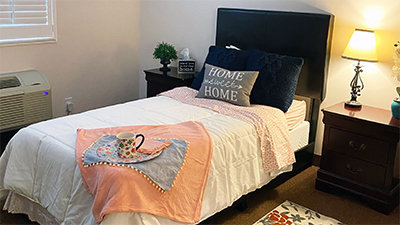
On paper, the big school checks more boxes for future preparation. Yet when the mother visits, she is noticeably distressed by the size, sound, and continuous motion. She feels lost in the long corridor and overwhelmed by the activity board.
At the smaller sized residence, she noticeably relaxes. She discusses the garden, notifications that she can see from one end of the typical area to the other, and keeps in mind the names of staff after a single visit.
Strictly from a risk management viewpoint, the huge campus might still appear safer. From a human viewpoint, the smaller sized community likely gives this specific woman a better possibility of flourishing. Her identity, practices, and nerve system all lean toward quiet. Her son's distance and participation additional alleviate the threat of needing to transfer to a greater level of care later.
This kind of case shows why there is no universal right answer.
When dementia is part of the picture
If your parent already has a dementia diagnosis, environment becomes even more critical. Memory care systems within busy campuses might include safe courtyards, specialized lighting, and personnel trained in dementia interaction techniques. They may provide structured day-to-day routines, which can be grounding, together with small group activities created for cognitive abilities.
However, not all memory care in big schools is equal. Some systems inherit noise and traffic from the larger complex. Personnel may turn often, and connection of relationships can suffer.
Smaller memory care settings sometimes supply a more homelike environment, with the exact same staff present day after day, which can be comforting for locals who count on familiar faces and regimens. On the drawback, if a resident's habits ends up being more complex (for example, frequent nighttime roaming, aggression, or serious medical needs), a little setting may not be able to handle safely.
For dementia, look less at the size of the total campus and more at the specific system your parent would reside in. Visit at various times of day, consisting of evenings. Notice how staff redirect stress and anxiety, how they react to repeated questions, and whether homeowners appear calm, engaged, or sedated.
Using respite care to "check drive" an option
For households uncertain whether a peaceful or hectic environment would suit their parent, respite care can work as a low-commitment experiment. A brief stay of one to four weeks provides real-world information. It shows how your parent sleeps, engages, and consumes because setting.
If scenarios allow, some families attempt two short stays: initially in the quieter setting, then a few months later in a larger campus, or vice versa. Not everybody has the financial or logistical capability to do this, however when possible, it frequently clarifies choices more than any tour.
During respite, track particular indications: Has your parent's state of mind enhanced or declined? Are they basically mobile? Do they call home in tears, or do they start to refer to staff and fellow locals by name? Personnel observations are also useful, specifically regarding how much triggering is required for bathing, medications, and activities.
Respite is also a test of how the community incorporates brand-new citizens. If a short-term visitor is welcomed warmly, presented around, and oriented patiently, that bodes well for long-lasting fit.
Questions to ask on tours, beyond the brochure
Once you have narrowed options, structured concerns can help you see past polished marketing. Used thoughtfully, this succinct set can guide discussions in both quiet and hectic settings.
How do you help brand-new locals adjust in the first thirty days, and who is liable for that procedure? What does a typical day look like for someone with my parent's mobility and cognitive level, including quieter parts of the day? How are modifications in condition interacted to households, and who has primary duty for that communication? Can you describe a recent situation where a resident's needs increased considerably, and how you managed it within your neighborhood? For residents who choose privacy or have sensory level of sensitivities, what particular supports or adaptations do you offer?Listen thoroughly not only to the material of the answers, but to how honestly staff talk about challenges and limits. Extremely idealized actions often suggest a gap between marketing and practice.
Helping your parent feel ownership of the decision
Many older adults have actually currently experienced several losses: of driving capability, buddies, spouses, and often earnings. Being "positioned" in assisted living can feel like another loss of control. Whether you choose a quiet sanctuary or a dynamic school, how you involve your parent while doing so matters.
Whenever possible, invite them to trips, even if they resist at first. Scale the experience to their endurance. One longer visit frequently works better than several brief, hurried walk-throughs. Pick up coffee in the neighborhood coffee shop or sit quietly in the lounge to get a sense of rhythm.
Ask direct however respectful concerns afterward: "When you picture yourself living there, how does your body feel?" "Was it too noisy, too quiet, or about right?" Sometimes an older grownup's unclear remark, such as "It just felt incorrect," hides a particular issue, like fear of getting lost or fret about sharing a dining-room with complete strangers. Carefully draw out the details.
When member of the family disagree about peaceful versus busy choices, it can help to name the worths at stake. Security, social engagement, autonomy, financial stewardship, and emotional convenience sometimes draw in different directions. A shared understanding of these top priorities makes it much easier to accept trade-offs.
Choosing in between a quiet assisted living setting and a larger, busier school is not a one-time binary judgment. It is an ongoing process of aligning your parent's identity, medical needs, and monetary truth with a specific place and team of individuals. Whether calm or dynamic, the right environment will feel less like an organization and more like a community where your parent can still recognize themselves.
BeeHive Homes of White Rock provides assisted living care
BeeHive Homes of White Rock provides memory care services
BeeHive Homes of White Rock provides respite care services
BeeHive Homes of White Rock supports assistance with bathing and grooming
BeeHive Homes of White Rock offers private bedrooms with private bathrooms
BeeHive Homes of White Rock provides medication monitoring and documentation
BeeHive Homes of White Rock serves dietitian-approved meals
BeeHive Homes of White Rock provides housekeeping services
BeeHive Homes of White Rock provides laundry services
BeeHive Homes of White Rock offers community dining and social engagement activities
BeeHive Homes of White Rock features life enrichment activities
BeeHive Homes of White Rock supports personal care assistance during meals and daily routines
BeeHive Homes of White Rock promotes frequent physical and mental exercise opportunities
BeeHive Homes of White Rock provides a home-like residential environment
BeeHive Homes of White Rock creates customized care plans as residents’ needs change
BeeHive Homes of White Rock assesses individual resident care needs
BeeHive Homes of White Rock accepts private pay and long-term care insurance
BeeHive Homes of White Rock assists qualified veterans with Aid and Attendance benefits
BeeHive Homes of White Rock encourages meaningful resident-to-staff relationships
BeeHive Homes of White Rock delivers compassionate, attentive senior care focused on dignity and comfort
BeeHive Homes of White Rock has a phone number of (505) 591-7021
BeeHive Homes of White Rock has an address of 110 Longview Dr, Los Alamos, NM 87544
BeeHive Homes of White Rock has a website https://beehivehomes.com/locations/white-rock-2/
BeeHive Homes of White Rock has Google Maps listing https://maps.app.goo.gl/SrmLKizSj7FvYExHA
BeeHive Homes of White Rock has Facebook page https://www.facebook.com/BeeHiveWhiteRock
BeeHive Homes of White Rock has an YouTube page https://www.youtube.com/@WelcomeHomeBeeHiveHomes
BeeHive Homes of White Rock won Top Assisted Living Homes 2025
BeeHive Homes of White Rock earned Best Customer Service Award 2024
BeeHive Homes of White Rock placed 1st for Senior Living Communities 2025
People Also Ask about BeeHive Homes of White Rock
What is BeeHive Homes of White Rock Living monthly room rate?
The rate depends on the level of care that is needed (see Pricing Guide above). We do a pre-admission evaluation for each resident to determine the level of care needed. The monthly rate is based on this evaluation. There are no hidden costs or fees
Can residents stay in BeeHive Homes until the end of their life?
Usually yes. There are exceptions, such as when there are safety issues with the resident, or they need 24 hour skilled nursing services
Do we have a nurse on staff?
No, but each BeeHive Home has a consulting Nurse available 24 – 7. if nursing services are needed, a doctor can order home health to come into the home
What are BeeHive Homes’ visiting hours?
Visiting hours are adjusted to accommodate the families and the resident’s needs… just not too early or too late
Do we have couple’s rooms available?
Yes, each home has rooms designed to accommodate couples. Please ask about the availability of these rooms
Where is BeeHive Homes of White Rock located?
BeeHive Homes of White Rock is conveniently located at 110 Longview Dr, Los Alamos, NM 87544. You can easily find directions on Google Maps or call at (505) 591-7021 Monday through Sunday 9:00am to 5:00pm
How can I contact BeeHive Homes of White Rock?
You can contact BeeHive Homes of White Rock by phone at: (505) 591-7021, visit their website at https://beehivehomes.com/locations/white-rock-2/, or connect on social media via Facebook or YouTube
Located near Beehive Homes of White Rock Dreamcatcher a great movie theater with full food & drink menu. Catch a movie and enjoy some great food while you wait.